
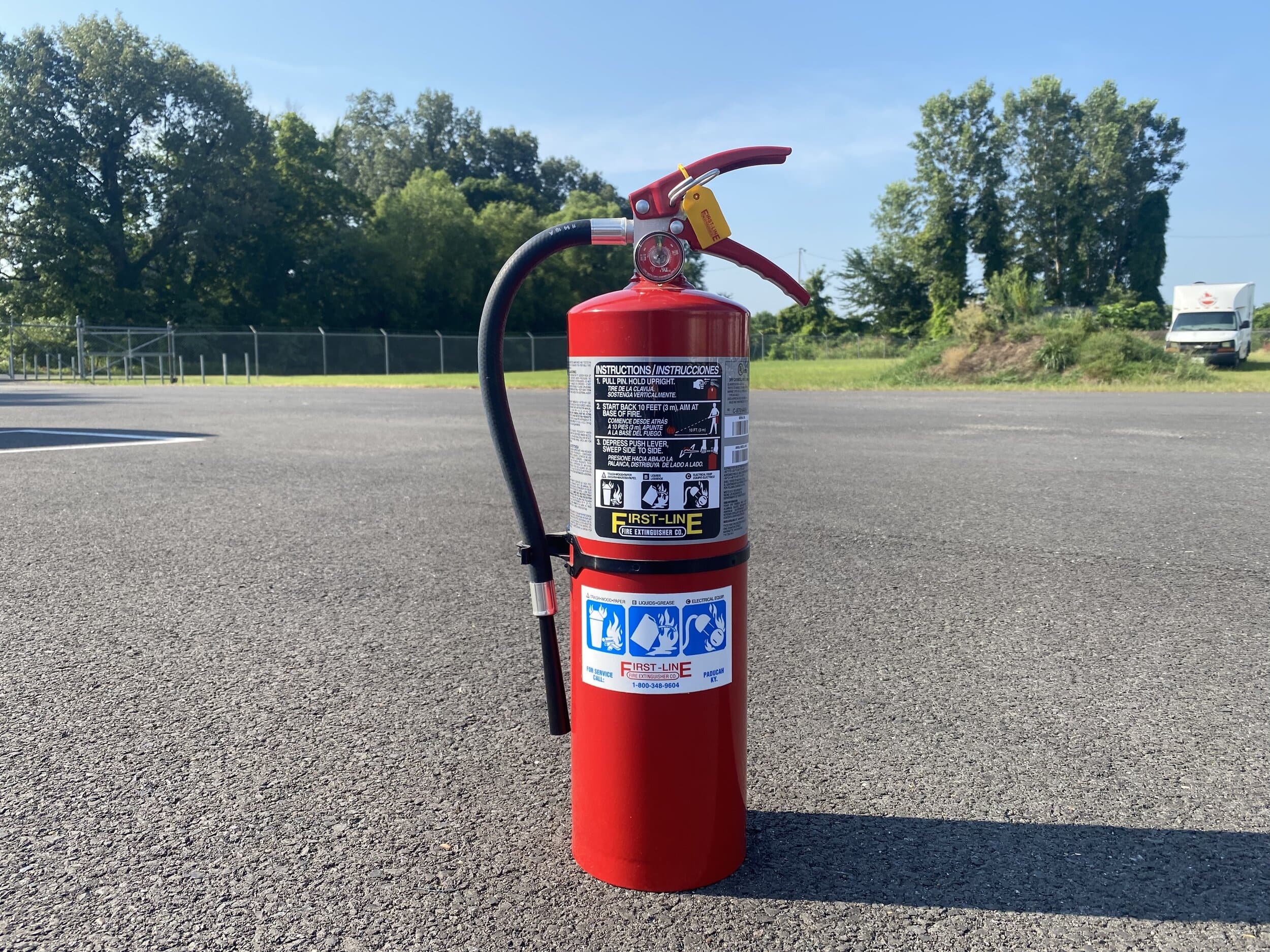
Quick Answer
No, you cannot legally or safely refill a fire extinguisher yourself. Fire extinguisher refilling — properly called recharging — must be performed by a certified technician using specialized equipment, factory-approved agents, and pressure testing procedures regulated under NFPA 10. DIY refilling violates fire codes, voids manufacturer warranties, fails fire marshal inspections, and creates serious safety hazards including the risk of cylinder rupture.
If your fire extinguisher has been used, lost pressure, or expired, contact a certified fire protection company like First-Line Fire to handle fire extinguisher service and recharging properly. A recharge is only half the story if the annual fire extinguisher inspection was nothing but a new date on the extinguisher. Here’s what a real recharge leaves behind.
Why You Can't Refill a Fire Extinguisher Yourself
Fire extinguishers may look simple, but they're high-pressure vessels containing carefully calibrated suppression agents. Several factors make DIY refilling impossible to do correctly and legally.
It's a Violation of NFPA 10 and Local Fire Codes
NFPA 10 — the national standard governing portable fire extinguishers — requires that all servicing, recharging, and maintenance be performed by trained, certified personnel. State and local fire codes adopt this standard, meaning a self-refilled extinguisher will fail any official inspection. Fire marshals will put the extinguisher out of service and may issue citations to the business.
If you are preparing for an inspection, First-Line Fire's Fire Marshal Inspection Checklist can help you understand what inspectors commonly review.
Specialized Equipment Is Required
Properly recharging a fire extinguisher requires equipment most businesses and individuals don't have:
- Recharge adapters specific to each extinguisher manufacturer and model
- Nitrogen pressurization systems with regulated pressure gauges
- Calibrated scales to measure agent fill weight to within ounces
- Hydrostatic test equipment for cylinders due for testing
- Vacuum systems for removing residual moisture before recharging
Without this equipment, you cannot achieve the precise fill weight and pressure that the extinguisher was designed for.
The Suppression Agent Matters
You can't just buy fire extinguisher powder at a hardware store. Different extinguishers use different agents:
- ABC dry chemical (monoammonium phosphate)
- BC dry chemical (sodium bicarbonate)
- Purple K (potassium bicarbonate)
- Class K wet chemical (potassium-based liquid)
- CO2 (compressed carbon dioxide)
- Clean agents (FM-200, Novec 1230, halotron)
Each agent must match the extinguisher's design specifications exactly. Mixing agents or using the wrong type creates an extinguisher that won't perform during a fire — potentially turning a small fire into a catastrophe.
For a broader overview, read First-Line Fire's guide to the types of fire extinguishers.
Pressure Testing Is Mandatory
Per NFPA 10, fire extinguisher cylinders must undergo hydrostatic pressure testing at specific intervals (every 5 or 12 years depending on type). This test verifies the cylinder can safely hold pressure. A self-refilled extinguisher with a compromised cylinder can rupture explosively, sending shrapnel and pressurized agent at lethal velocities.
What Happens If You Refill an Extinguisher Yourself?
The consequences range from inconvenient to catastrophic:
- Failed fire marshal inspection. Your business gets cited and the extinguisher is taken out of service.
- Voided insurance coverage. If a fire occurs and your insurance company discovers improperly serviced extinguishers, claims may be denied.
- Voided manufacturer warranty. Self-service typically voids any warranty on the unit.
- Liability exposure. If a fire injures someone and your extinguisher failed, you could face significant legal liability.
- Risk of injury or death. Improperly pressurized cylinders can rupture during recharge or use.
- Ineffective fire protection. A self-refilled extinguisher may not discharge properly when you need it most.
What to Do Instead
If your fire extinguisher needs to be refilled, follow these steps:
- Take the extinguisher out of service and remove it from its mounting location
- Mark it clearly so no one mistakes it for a working unit
- Contact a certified fire protection company like First-Line Fire to schedule fire extinguisher service
- Replace it temporarily if the location requires fire protection coverage during the recharge period
- Document the service in your fire safety records once complete
Most professional recharge services can be completed within 24 to 48 hours, and many providers offer mobile recharge units that come directly to your facility. If your team also needs help using extinguishers correctly, First-Line Fire offers fire safety and fire extinguisher training.
How Much Does Professional Fire Extinguisher Recharging Cost?
Professional recharge service typically costs significantly less than buying a new extinguisher:
- Small ABC dry chemical (5 to 10 lb): $20 to $40
- Larger ABC dry chemical (20 lb): $40 to $75
- CO2 extinguisher: $35 to $80
- Class K wet chemical: $50 to $100
- Clean agent (Halotron, FM-200): $75 to $150+
These prices include the agent, pressurization, inspection, and a service warranty. When the cylinder is also due for hydrostatic testing, costs increase by $25 to $75 depending on size and type.
When Replacement Makes More Sense Than Refilling
Sometimes recharging isn't economically practical. Consider replacement instead of recharging when:
- The cylinder is older than 12 years and due for hydrostatic testing
- The extinguisher shows physical damage (dents, corrosion, cracked hose)
- The manufacturer date is more than 12 years old (most extinguishers have a 12-year service life)
- The valve assembly is damaged or corroded
- The recharge cost approaches 50% or more of replacement cost
A certified technician can advise whether your specific unit is worth recharging or should be replaced. First-Line Fire can help with fire extinguisher sales, installation, inspection, and maintenance for businesses that need compliant equipment.
Get Your Fire Extinguishers Professionally Recharged
Since 1984, First-Line Fire Extinguisher Co. has provided professional fire extinguisher recharge, inspection, and replacement services for businesses throughout Kentucky, Indiana, Illinois, and Tennessee. Our certified technicians use factory-approved equipment, agents, and procedures to ensure every extinguisher we service meets NFPA 10 standards and is ready to perform when you need it.
We offer mobile recharge service that comes to your facility, minimizing downtime and ensuring your fire protection coverage stays intact. You can view First-Line Fire's regional offices on the locations page.
Schedule your fire extinguisher service today. Call 1-800-348-9604 or contact your nearest First-Line Fire location.
Frequently Asked Questions
Is it illegal to refill a fire extinguisher yourself?
While not always criminally illegal, refilling a fire extinguisher yourself violates NFPA 10 standards and state fire codes adopted in nearly every jurisdiction. The extinguisher will fail any official inspection, and businesses can face fines and citations from fire marshals.
Can I buy fire extinguisher refill powder?
Manufacturers don't sell suppression agents to the general public. Recharge agents are sold only to certified fire protection companies that have the equipment, training, and certifications required to use them properly.
How long does it take to recharge a fire extinguisher?
A professional recharge typically takes 15 to 30 minutes per extinguisher. Most fire protection companies offer same-day or next-day service, and mobile recharge units can service multiple extinguishers on-site at your facility.
Do disposable fire extinguishers need to be recharged?
No. Disposable (non-rechargeable) fire extinguishers are designed for single use and must be replaced after discharge or when they expire. These are typically smaller residential extinguishers. Commercial extinguishers are almost always rechargeable.
What's the difference between recharging and replacing a fire extinguisher?
Recharging refills an existing extinguisher with new agent and pressurization. Replacing means installing a brand-new extinguisher. Recharging is appropriate for newer units in good condition; replacement is required when the cylinder is too old, damaged, or due for hydrostatic testing that would cost more than a new unit.
What should I do after using a fire extinguisher?
After using a fire extinguisher, take it out of service immediately and schedule professional recharging or replacement. If your employees need a refresher on proper operation, review the PASS method in First-Line Fire's guide to using a fire extinguisher.
Need help with this?fire extinguishers. Call1-800-348-9604.