
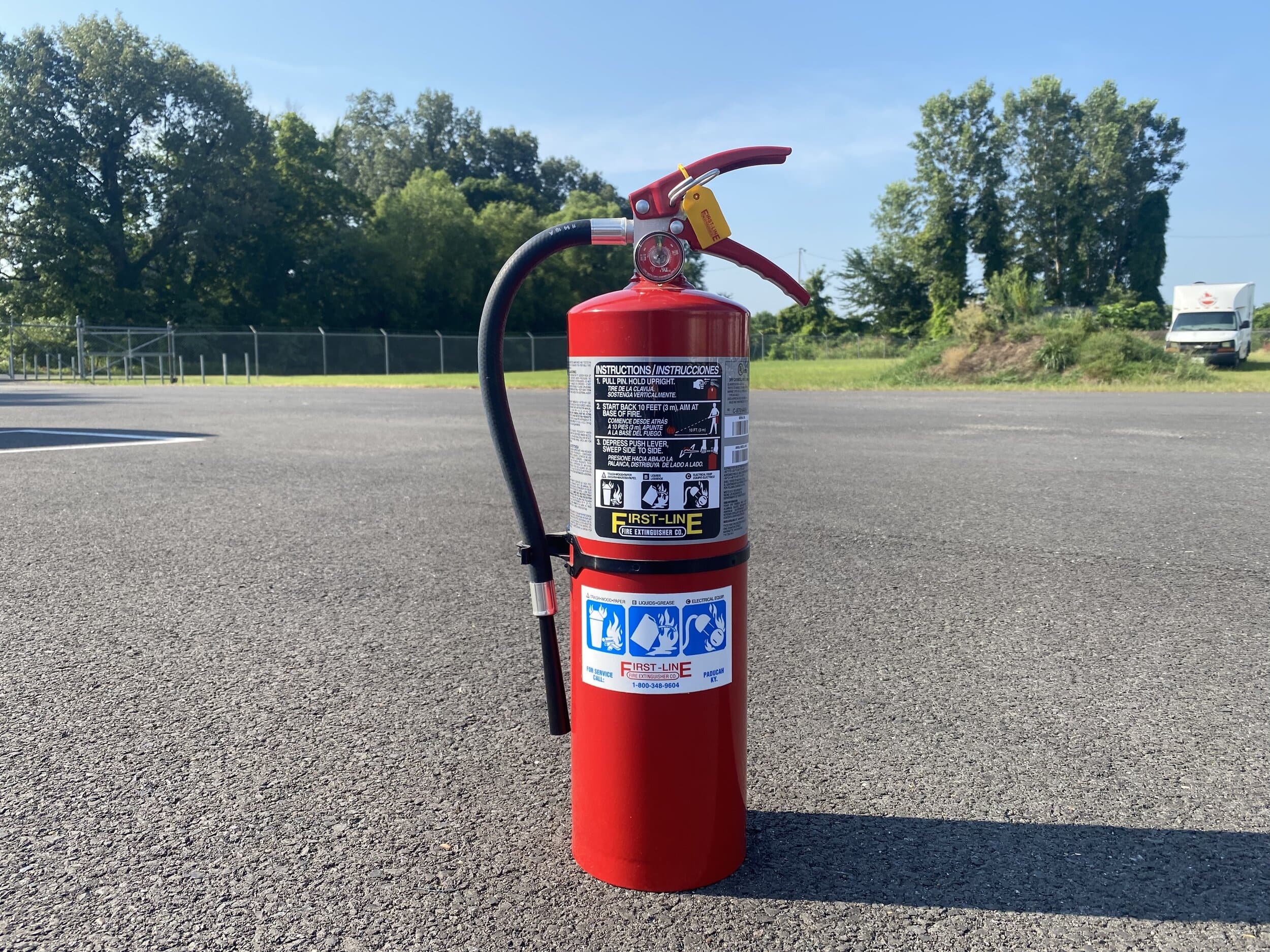
How Long Does a Fire Extinguisher Last Once Used?

Quick Answer

A fire extinguisher must be recharged immediately after any use, even if it was only partially discharged. Once the seal is broken and the lever is squeezed, even briefly, the extinguisher loses pressure over time and cannot be relied upon for future emergencies. There is no "safe amount" of partial use — any discharge means the unit needs professional service before it returns to duty. Disposable non-rechargeable extinguishers must be replaced entirely.

Why a Used Fire Extinguisher Can't Be Trusted

Many people assume that if they only used "a little" of their fire extinguisher, the rest is still good for next time. This is one of the most dangerous misconceptions in fire safety. Here's why a used extinguisher is effectively unusable until serviced.

The Internal Seal Is Permanently Broken

Fire extinguishers are pressurized vessels held closed by a precision valve assembly. When you pull the pin and squeeze the handle, that seal opens. Even if you release the handle immediately, the valve has been disturbed and microscopic damage to seals and o-rings can allow slow pressure loss over hours, days, or weeks.

If your team has used an extinguisher during an emergency or practice scenario, review First-Line Fire’s guide on using a fire extinguisher with the P.A.S.S. method and schedule service before returning that unit to its bracket.

Pressure Drops Rapidly After Use

After even a brief discharge:

  • The internal pressure drops below operational specifications

  • The pressure gauge may still appear in the green zone temporarily

  • Slow leakage through the disturbed valve continues

  • Within weeks, pressure can fall below the level needed to discharge agent effectively

A pressure gauge reading "green" after partial use is misleading. The gauge measures static pressure at one moment, not the seal integrity required for reliable performance.

Agent Distribution Becomes Unreliable

In dry chemical extinguishers, the powder relies on consistent pressurization to flow properly through the discharge nozzle. Partial use can leave the remaining agent unevenly distributed, with pockets of compacted powder that won't discharge correctly during a real emergency.

For more context on how dry chemical units work, see First-Line Fire’s article on multi-class dry fire extinguishers.

You Don't Know How Much Is Left

There's no reliable way to measure remaining agent in a partially discharged extinguisher without specialized scales. The pressure gauge tells you nothing about how much suppressant remains inside.

What "Once Used" Actually Means

Any of the following counts as use that requires professional recharging:

  • Pulling the pin and squeezing the handle, even for a fraction of a second

  • A brief test discharge to verify operation

  • Accidental discharge from being knocked over or handled roughly

  • Discharge during fire safety training

  • Tampering by employees, customers, or vandals

If the seal pin has been removed and replaced, or the tamper indicator shows it has been activated, the extinguisher needs service even if you don't think it was discharged.

What to Do Immediately After Using a Fire Extinguisher

Follow these steps right after any use:

  1. Take it out of service immediately. Don't put a used extinguisher back on its mounting bracket. Remove it from the location entirely.

  2. Tag it clearly. Write "USED — DO NOT USE" on a piece of paper or use a service tag and attach it to the extinguisher so no one mistakes it for operational.

  3. Replace it temporarily. If the location is required to have fire protection coverage, which is usually the case in commercial buildings, install a backup extinguisher of the same class until the original is recharged.

  4. Document the use. Note the date, location, what was discharged, and why. This information is important for fire safety records and may be relevant for insurance purposes.

  5. Schedule professional service. Contact a certified fire protection company within 24 to 48 hours. First-Line Fire provides fire extinguisher sales and service for businesses that need inspections, maintenance, replacement, and recharge support.

  6. Check the rest of your extinguishers. A fire incident is a good prompt to verify that other extinguishers in the facility are properly charged, accessible, and within service date. First-Line’s Fire Marshal Inspection Checklist can help you review related compliance items.

Disposable vs. Rechargeable: Know the Difference

Not all fire extinguishers can be recharged. Knowing which type you have determines what to do after use.

Rechargeable Fire Extinguishers

  • Identifiable by: Metal valve assembly, pressure gauge, larger size, typically 5 lb or more

  • What to do after use: Take to a certified service provider for recharging

  • Service life: Typically 12 years with regular maintenance

  • Cost to recharge: $20 to $150 depending on type and size

Disposable Non-Rechargeable Fire Extinguishers

  • Identifiable by: Plastic valve assembly, smaller size, typically 2 to 5 lb, often labeled "disposable"

  • What to do after use: Discard properly and purchase replacement

  • Service life: Typically 12 years from manufacture date or single use

  • Cost to replace: $25 to $75

Most residential fire extinguishers sold at home improvement stores are disposable. Most commercial fire extinguishers are rechargeable. If you are unsure which type your facility has, First-Line’s overview of types of fire extinguishers is a helpful starting point.

Why You Should Never Skip Recharging After Use

Some business owners are tempted to delay recharging, especially after small kitchen fires where they think the extinguisher "barely got used." This is a costly mistake for several reasons.

Insurance implications. If another fire occurs and your insurance company discovers an unrecharged extinguisher contributed to the damage, claims may be reduced or denied.

Fire marshal violations. Inspectors check tamper indicators and pressure gauges. A used extinguisher will be tagged out of service and you may face citations.

OSHA compliance issues. Workplaces are required to maintain operational fire protection equipment. An untrustworthy extinguisher creates regulatory exposure.

Real emergency failure. The next fire might be the one that gets out of control because your extinguisher didn't perform. Portable extinguishers already have practical limits, which First-Line explains in Fire Extinguishers Have Their Limits.

Liability exposure. If anyone is injured because a used extinguisher failed, you face significant legal risk.

How Much Does It Cost to Recharge a Used Extinguisher?

Recharge cost depends on the type and size of extinguisher:

  • 5 lb ABC dry chemical: $20 to $35

  • 10 lb ABC dry chemical: $25 to $45

  • 20 lb ABC dry chemical: $40 to $75

  • 5 lb CO2: $35 to $60

  • 10 lb CO2: $50 to $80

  • Class K wet chemical, 2.5 gallon: $75 to $125

  • Clean agent, Halotron, FM-200: $75 to $150+

Compared to the cost of a new extinguisher, typically $100 to $400+ for commercial units, recharging is almost always more economical, assuming the extinguisher is otherwise in good condition.

Get Your Used Fire Extinguishers Recharged Quickly

Since 1984, First-Line Fire Extinguisher Co. has provided fast, professional fire extinguisher recharge services for businesses throughout Kentucky, Indiana, Illinois, and Tennessee. Our certified technicians use factory-approved equipment and agents to ensure every extinguisher we recharge meets NFPA 10 standards and performs reliably when you need it.

We offer mobile recharge service that comes directly to your facility, minimizing downtime and ensuring your fire protection coverage stays intact while your unit is being serviced.

If your employees need help understanding when and how to use extinguishers safely, First-Line also offers fire safety training.

Schedule recharge service today. Call (270) 279-1865 or contact your nearest First-Line Fire location.

Frequently Asked Questions

Can I tell if a fire extinguisher has been used by looking at it?

Yes, in most cases. Check the tamper indicator, which is the plastic seal on the pin. If it's broken or missing, the extinguisher has likely been used or tampered with. The pressure gauge may also read low. If there's any doubt, treat it as used and have it inspected.

Does a fire extinguisher need to be recharged if I only sprayed it for one second?

Yes. Any activation of the discharge mechanism requires recharging. The internal seal has been broken, and pressure loss over time will make the extinguisher unreliable, even if it briefly registers as "full" on the gauge.

How long after use do I have to recharge an extinguisher?

You should remove the extinguisher from service immediately and schedule recharging within 24 to 48 hours. The location it protected should have a temporary replacement during this period to maintain fire protection coverage.

Can I use my extinguisher if it shows green pressure after a small discharge?

No. The pressure gauge measures pressure at that exact moment but doesn't account for slow leakage from the disturbed valve seal. The extinguisher may discharge weakly or fail entirely during the next fire.

Is it cheaper to replace or recharge a used extinguisher?

For most commercial extinguishers, recharging is significantly cheaper than replacement. A typical recharge costs $20 to $75, while a new commercial extinguisher costs $100 to $400 or more. The exception is small disposable residential extinguishers, which must be replaced.

How often does a fire extinguisher need to be recharged even if it hasn't been used?

Even unused extinguishers require professional inspection annually and full maintenance every 6 years, including internal examination, and 12 years for hydrostatic testing per NFPA 10. The agent itself can also be replaced periodically as part of standard maintenance.

What should I do with a used disposable fire extinguisher?

Disposable extinguishers should be fully discharged into a safe outdoor area before disposal so they're not pressurized in the trash, then disposed of according to local regulations. Many fire protection companies will accept used disposable extinguishers for proper disposal.

Next
Next

Can You Refill a Fire Extinguisher Yourself?