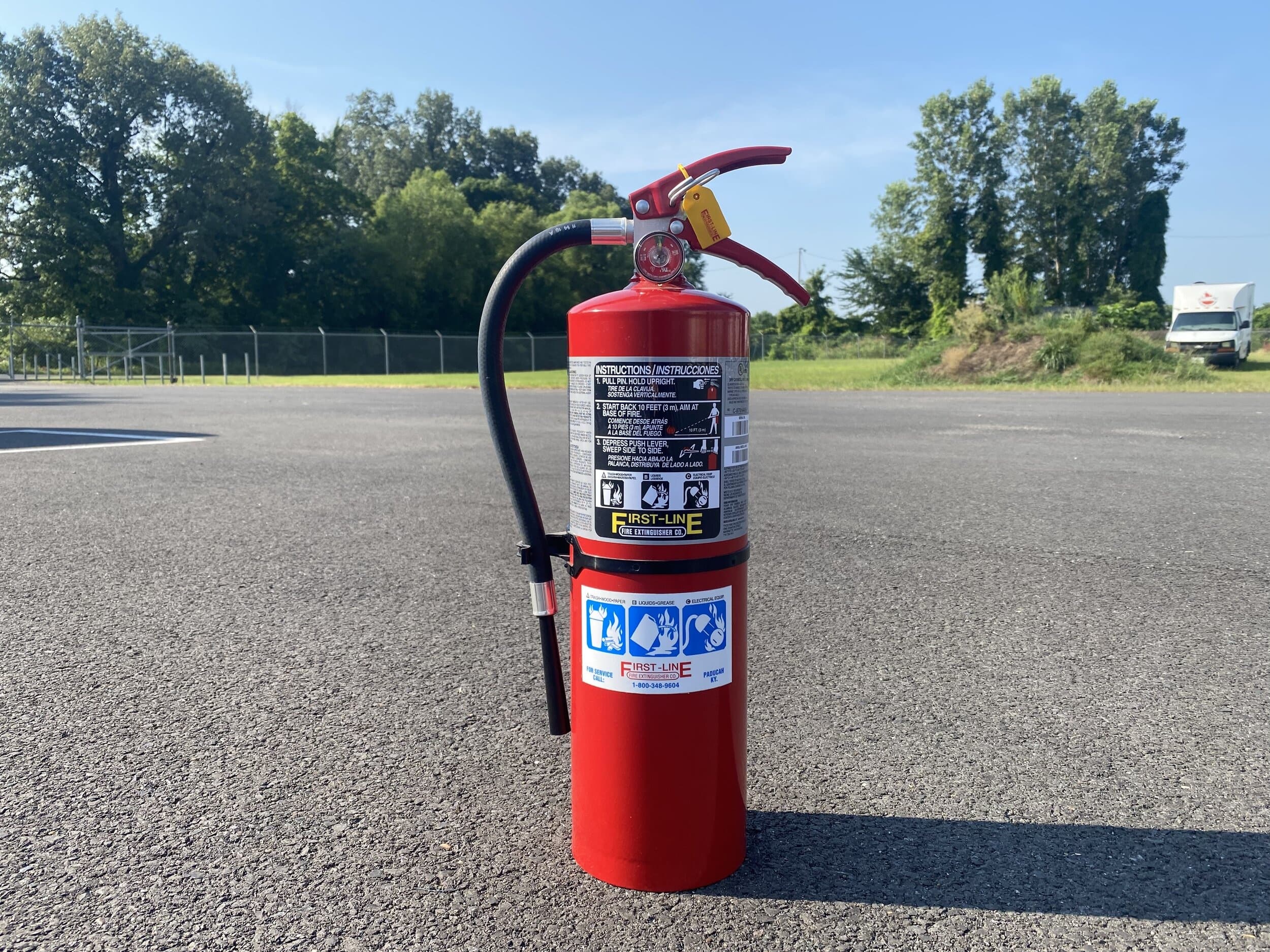
The fire extinguisher must be appropriate for the type of fire being fought. Multipurpose fire extinguishers, labeled ABC, may be used on all three classes of fire. If you use the wrong type of extinguisher, you can endanger yourself and make the fire worse. It is also very dangerous to use water or an extinguisher labeled only for Class A fires on a cooking-grease or electrical fire.
Depending on their intended use, portable extinguishers store specific “extinguishing agents,” which are expelled onto the fire.
The types of fire extinguishers include
Pressurized water models
Class A only. Never on electrical or flammable-liquid fires.
Carbon dioxide
Pressurized liquid CO2 turns to gas at the horn. Rated B and C, and it can be used on Class A. No residue.
Dry chemical
Stored-pressure or cartridge-operated. These leave a residue that has to be cleaned up after the fire is out.
Ammonium phosphate
A / B / C. Never on a commercial grease fryer — it can reflash and it hurts the hood system.
Sodium bicarbonate
B / C. Preferred among dry chemicals for grease fires. Use the built-in system first.
Potassium bicarbonate, urea-base potassium bicarbonate, and potassium chloride
More effective, and they take less agent than sodium bicarbonate.
Foam (AFFF and FFFP)
Coat the burning flammable-liquid surface. Blanket the entire surface to exclude air.
The right type still has to be inspected and serviced — that’s fire extinguisher inspection.
Need the right type hung, inspected, or recharged? That work is fire extinguishers. Call 1-800-348-9604.