
PORTABLE PROTECTION
Your extinguishers have to work when somebody grabs one.
Most people see a recent date on the extinguisher and figure they’re covered. Fair enough. If you don’t work this trade, that date is all you’ve got to go on. Looking current isn’t the same as being serviced.
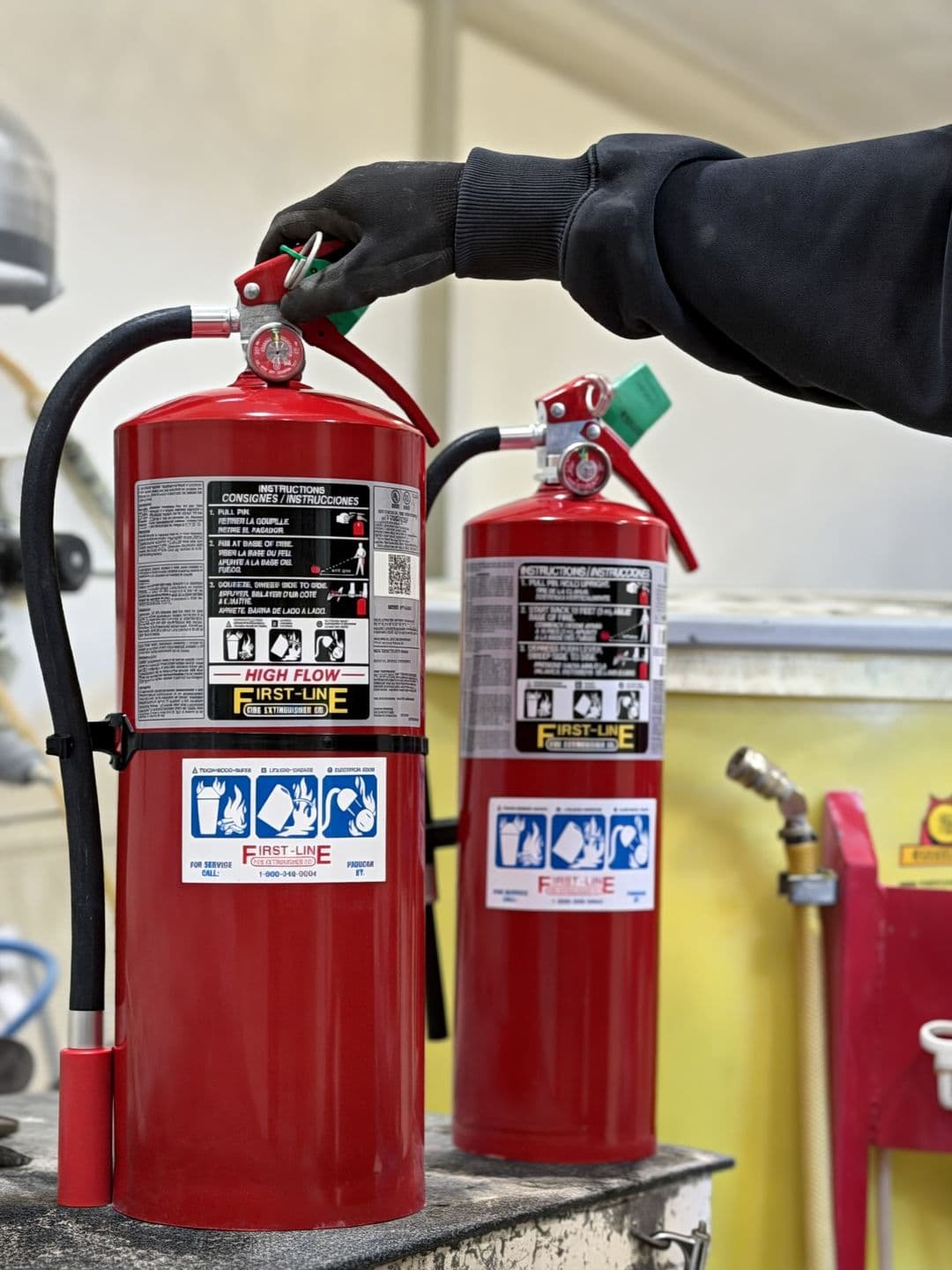
We sell the right extinguisher, the first time. We hang it, inspect and service it, recharge it, and hydro-test the cylinder when it’s due. We leave a report. We keep the due dates. You don’t have to think about them.
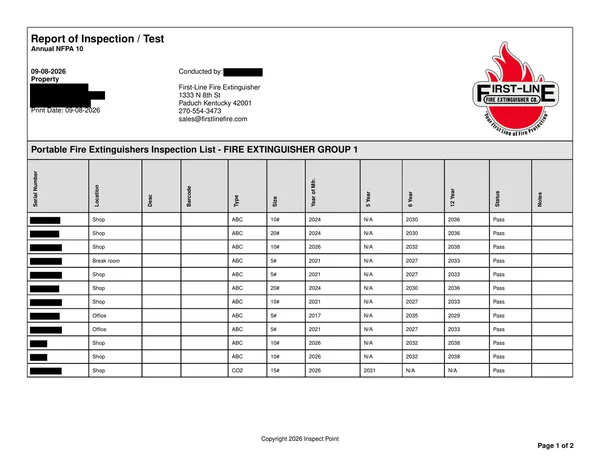
This is a real report from one of our inspections, with the customer's details blacked out.
See a sample reportWhat the work actually is
Once a year, every extinguisher gets a hands-on inspection. We check the pressure, the pin and seal, the hose and nozzle, the label, and the cylinder for dents or rust. We make sure it’s the right one for that spot and that people can get to it.
Every six years, stored-pressure dry chemical extinguishers are discharged, and we do an internal examination before we recharge them. That’s the part nobody can see from the outside.
Any extinguisher that’s been used, even for a quick squeeze, needs a recharge. A partly used one can lose pressure and won’t be there the next time.
Every cylinder also has to be pressure tested every 5 or 12 years, depending on the type. Here’s how hydro testing works.
In between, somebody should look at every extinguisher once a month. Is it on the wall? Is the gauge in the green? Is the pin in? Your people can do that, or we can walk it for you.
Picking the right one
Not every extinguisher fits every spot. An ABC unit covers most offices, stores, and shops. A kitchen with a fryer needs a Class K. Some hazards need something else. We match the extinguisher to the hazard, and we hang it where somebody can reach it.
How a visit goes
- We walk the floor while you keep running. You don’t have to shut down.
- We check every extinguisher and pull any that are due for maintenance, a recharge, or a hydro test.
- We service what we can on site. Our trucks carry loaners. If an extinguisher has to come back to the shop, a loaner goes up in its place until yours is back.
- We hang what’s ready and leave a report.
After the visit
Your extinguishers go on the same calendar as any hood systems, alarms, and lights we service for you. We keep up with the date.
Who it’s for
Anyone who keeps extinguishers on the wall: stores, churches, plants, healthcare, schools, kitchens, river vessels, and fleets. If you’re opening a new place and don’t know what you need, we’ll walk it and tell you.
If one gets used or can’t wait
If somebody used an extinguisher, or one’s damaged or missing, that spot isn’t covered. Call. Our 24-hour service covers discharged units and emergency replacements.
Questions
- How can I tell if mine were really serviced?
- After a recharge or maintenance, there should be a new verification collar under the valve, and you should get a report from the visit. Here’s how to tell if your extinguishers were really serviced.
- Do I have to keep track of when they’re due?
- No. That’s our job.
- Can you take over from the company we use now?
- Yes. We’ll walk every extinguisher, tell you what shape they’re in, and put them on your calendar.
Areas we serve
Served from Paducah, Madisonville, and Princeton, IN. City pages:
Call or request a quote.
Send the form and we will call you.