US labels use Class A, B, C, D, and K. That is the fuel. Match the unit to the hazard on your floor.
Fire classification chart
| Fire class | Type of fire | What burns | Extinguisher |
|---|---|---|---|
| A | Ordinary combustibles | Wood, paper, cloth, most plastics | Water, foam, ABC dry chemical |
| B | Flammable liquids and gases | Gasoline, oil, solvents, propane | Foam, CO2, dry chemical |
| C | Energized electrical | Wiring, appliances, panels | CO2, dry chemical |
| D | Combustible metals | Magnesium, titanium, sodium | Specialized dry powder |
| K | Cooking oils and fats | Fryer oil, commercial grease | Wet chemical |
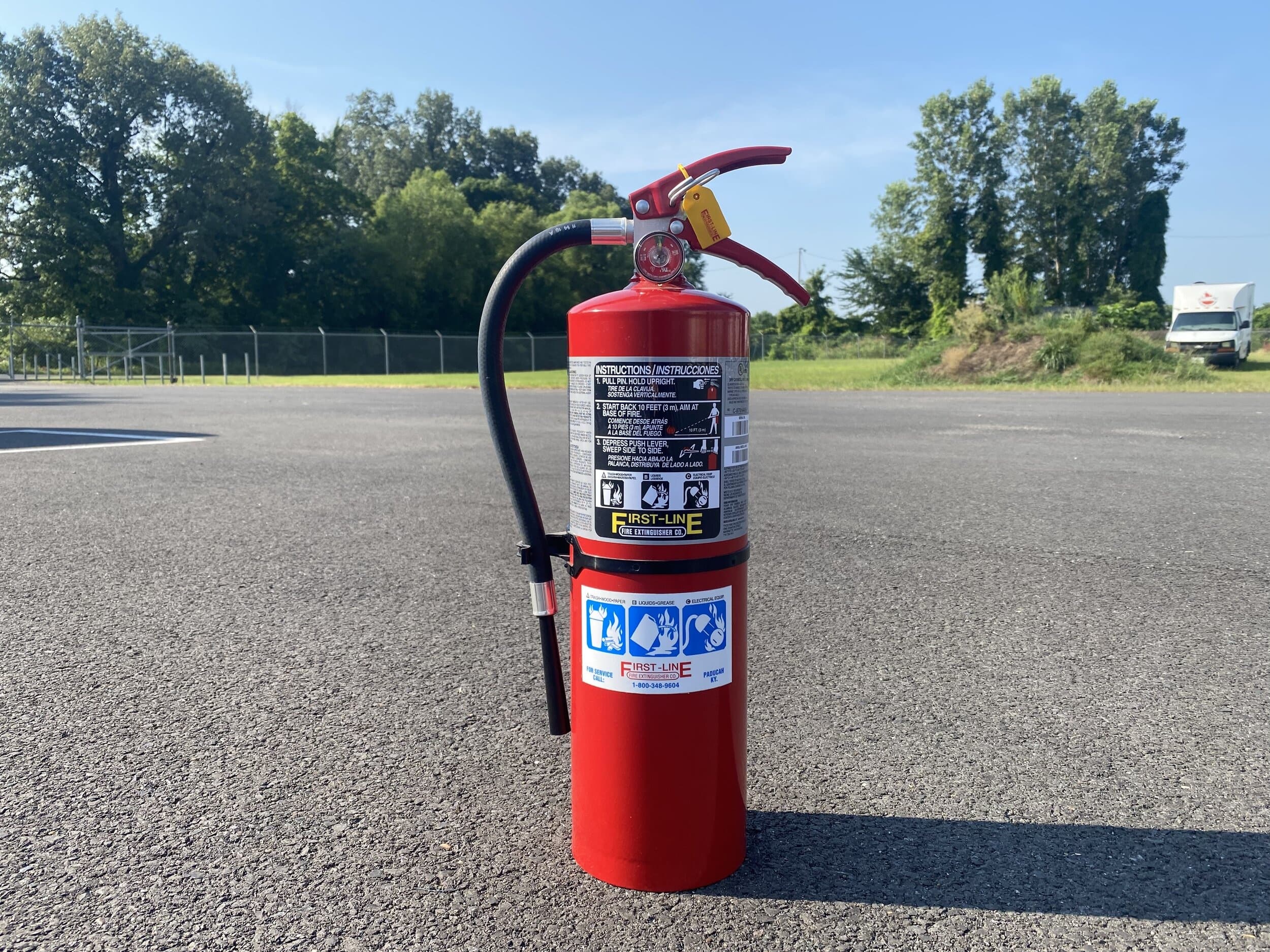
Some units cover more than one class (ABC). Some are built for one. Read the pictograms on the label. Colored bands around the cylinder are a European system — not what we hang here.
Class A — ordinary combustibles
Wood, paper, cloth, most plastics. Water, foam, or ABC dry chemical.
Class B — flammable liquids and gases
Gasoline, oil, solvents, propane. Foam, CO2, or dry chemical. Do not use water — it can spread the liquid.
Lithium-ion is not a letter class on the extinguisher. An ABC unit can knock down visible flame. It does not stop thermal runaway inside the cells. Treat a lithium pack as its own problem.
Class C — energized electrical
Wiring, appliances, panels. CO2 or dry chemical. Non-conductive agents only while it is still powered. Kill the power and the class can change.
Class D — combustible metals
Magnesium, titanium, sodium. Specialized dry powder only. Water and standard dry chemical can react badly.
Class K — cooking oils and fats
Commercial kitchens and fryers. Wet chemical. Forms a soapy foam that cools and smothers.
On your floor
Hang the right units for the hazard. Keep them charged and on the date. Annual service is the professional visit. Somebody has to look at them every month. That can be your people. Or it can be us.
We sell, hang, inspect, recharge, and hydro-test. Call1-800-348-9604. Live-fire training when the crew needs to pull a pin on purpose.