
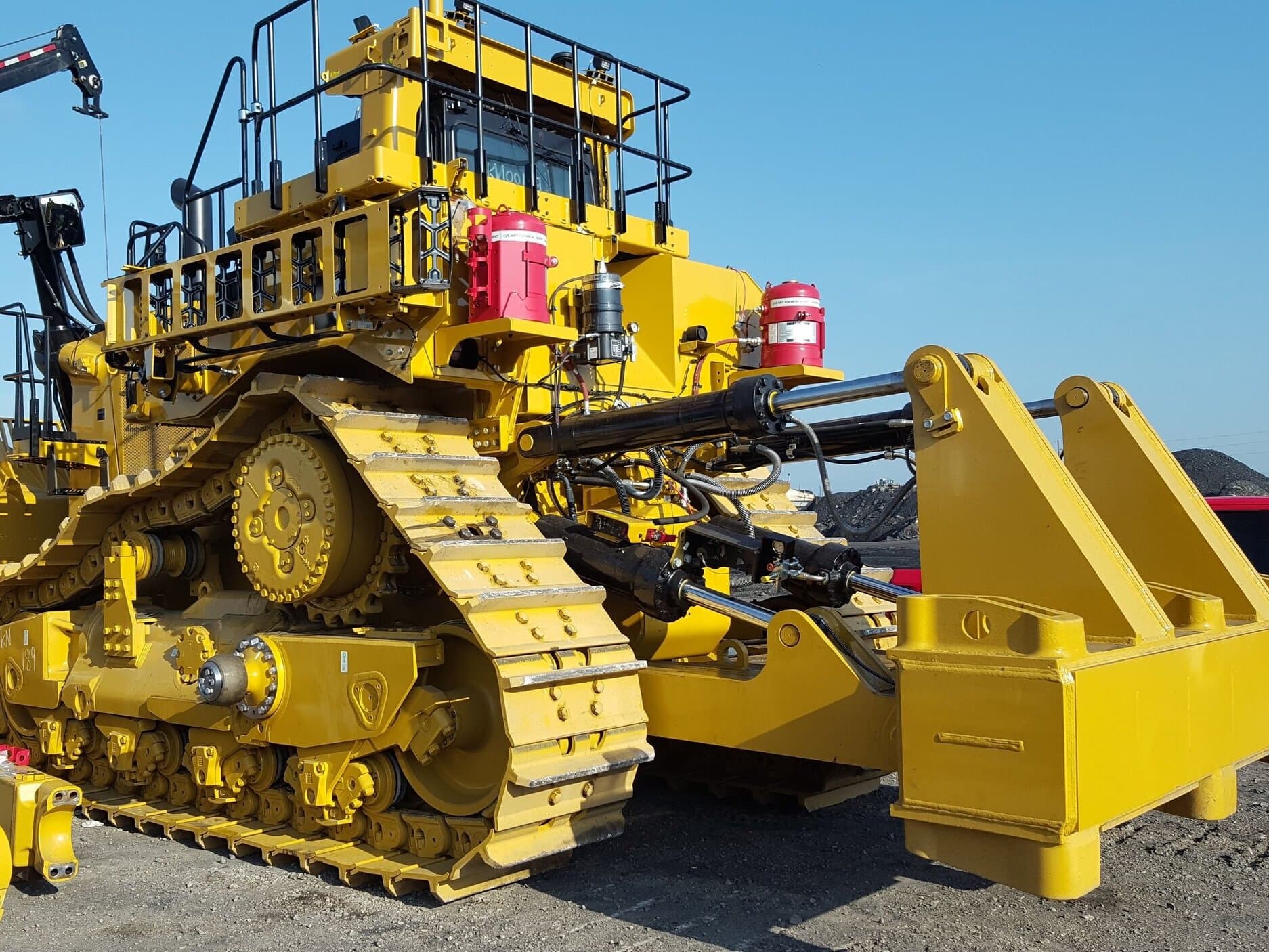
Around Madisonville, a lot of the equipment that keeps this county working has a fire suppression system mounted right on it. Up top, that's haul trucks, loaders, and dozers. Underground, it's continuous miners, scoops, and shuttle cars. If you run machines like that, sooner or later somebody asks how often that system has to be checked, and who's supposed to do it.
Here's the short answer. There are two layers. Somebody on site gives the system a quick look on a regular basis, and a trained tech does the full inspection and service on the schedule the system calls for. Both matter, and they aren't the same job.
The quick look between visits
The first layer is a visual check by somebody who knows the machine. Usually that's the operator or somebody on the site crew. It doesn't take long, and nothing comes apart.
What they're looking for is anything that's plainly wrong:
- A hose that's come loose, been pinched, or rubbed through.
- A nozzle that's been knocked out of line or packed full of dirt and grease.
- A cylinder that's dented, rusted, or loose in its bracket.
- A gauge, if the system has one, that isn't reading where it should.
- A manual release in the cab that's blocked or damaged.
If something's off, write it down and call us. A system with a cut hose or a plugged nozzle may not get agent to the fire.
The full service by a trained tech
The second layer is the real inspection, test, and maintenance. A trained tech does it, and the system's manufacturer sets what gets done. Every vehicle system we take care of gets serviced every six months.
At the machine, the tech goes through the whole system. That means the agent cylinder and how it's mounted, every hose and fitting between the cylinder and the nozzles, and every nozzle, to make sure it's clear and aimed where a fire would start. If the system goes off on its own when it senses a fire, the tech checks the detection. The tech also checks the releases, both the automatic one and the manual one in the cab, so they'll work when somebody needs them.
We come to the yard or the job site, so the machine doesn't have to come to us. When we're done, we leave a report. All of our techs are certified and licensed.
If you want to know more about what these systems do and how we put one in, that's on our vehicle suppression page.
Underground mines have their own rule
If the machine works underground, federal mine safety rules add to all this. For diesel equipment underground, a trained person has to look the system over at least once a week. The system gets tested and maintained the way its manufacturer says. Anything wrong that turns up gets written down, and those records stay at the mine for a year.
The federal mine safety office describes that weekly check as a quick look for things like a disconnected hose or a nozzle that's been changed. It isn't meant to be the full inspection. The full inspection is still the second layer above.
Our reports are written to match what MSHA looks for, and what Avetta asks for when your site uses it. Our Madisonville shop is the one we call our coalfield shop, and there's more about our mine work on our coal mining page.
What resets the clock
A schedule assumes nothing happens between visits. A few things change that.
It went off. Once a system discharges, that machine isn't protected until it's recharged. Running it before then means running it with nothing on it. Call us. Our 24-hour service recharges it so the machine can go back to work.
The machine got worked on. A repair or a rebuild can move a hose, reroute a line, or put a new part right where a nozzle used to point. After major work, have the system looked at before the machine goes back out.
A cylinder came due. The agent cylinders on these systems get hydro-tested when they're due. When one comes up, we take care of it.
The quick look found something. Any time the operator's check turns up a problem, don't wait for the next visit.
Taking over a system somebody else put in
If the systems on your machines were put in by somebody else, that's fine. We'll look them over, tell you what shape they're in, and put them on your calendar. When you add machines to the fleet, they go on the same calendar.
The handheld still matters
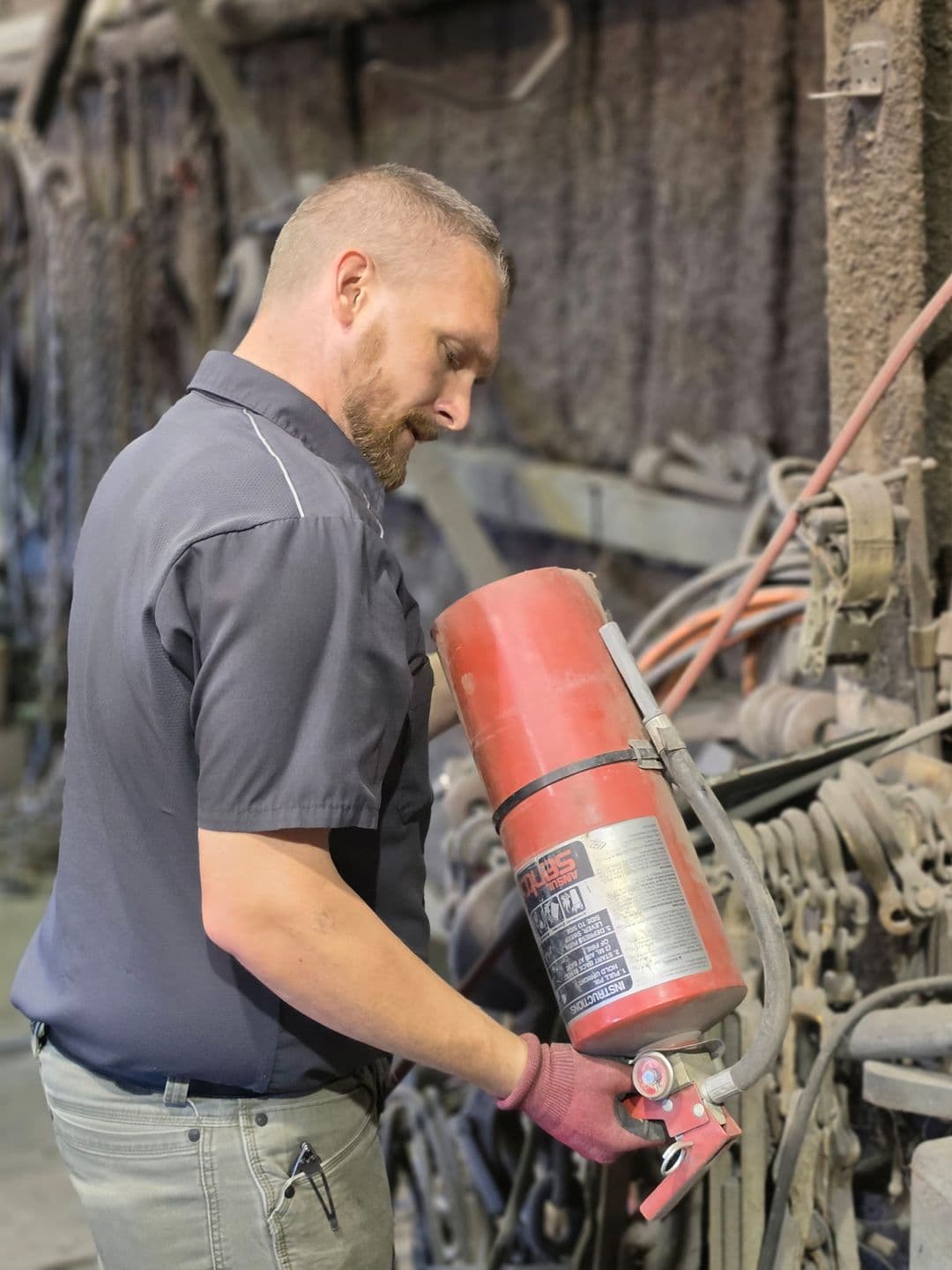
A system on the machine doesn't mean the operator goes without an extinguisher. Most machines still need a handheld. The system covers the machine, and the handheld is backup for the operator.
Who keeps track of all this?
A six-month service on every machine, a cylinder coming due here and there, and a weekly check on everything underground. Across a whole fleet, that's a lot to keep straight on top of running the work. That's the part we take off your plate. We keep up with the due date so you don't have to.
Questions people ask
- Can the operator do the inspection?
- The operator can do the quick look, and on a lot of sites that's who should. The full inspection and service is a job for a trained tech.
- How often does a vehicle fire suppression system get serviced?
- Every six months. That goes for every vehicle system we take care of.
- Do you come out to the mine or the job site?
- Yes. We service machines at the yard, in the shop, or out on the job, above ground or below.
If you run machines around Madisonville and want somebody to look at what's on them, call 1-800-348-9604 or send the form, and we'll get you on the calendar.