A finished building has walls that slow a fire down, an alarm that tells people to leave, and exits everybody knows. A building that's still going up doesn't have any of that yet. What it has instead is a lot of things that burn, like lumber, packaging, fuel, and trash. Add sparks from cutting and welding, heaters running in the cold, and wiring that's only meant to last a few months, and you can see why a job site needs its own fire plan.
Most of it comes down to a short list of things you can plan for before the first weld.
Hot work
Welding, cutting, and grinding throw sparks and hot metal a long way. They land in cracks, fall through openings in the floor, and settle into piles of debris where nobody is looking. Before hot work starts, clear the area of anything that will burn, and cover what can't be moved with a fire-resistant blanket. Keep a charged extinguisher right there with the crew.
Then put somebody on fire watch whose only job is watching for fire, during the work and for a while after it stops. A spark can smolder for a long time before it ever flames up. If your site uses hot work permits, the fire watch stays as long as the permit says.
Temporary heat
Heaters on a job site run close to things that burn, and they often run with nobody around. Use heaters made for the job, keep them well clear of tarps, lumber, and fuel, and follow the clearances on the heater. Never leave one running with nobody watching it, and refuel it the way its maker says, with it off and cooled down.
Fuel and flammables
Gasoline, diesel, propane, solvents, and adhesives should be in proper containers and cabinets, labeled, and kept away from the work and away from the ways out. Refuel equipment with the engine off. Don't keep a row of gas cans next to the saw.
Trash
Packaging, scrap lumber, and sawdust pile up fast. Get it into a dumpster away from the building every day instead of stacking it against a wall. Oily rags go in a metal can with a lid.
Temporary wiring
Temporary power takes a beating. Cords get run over, pinched in doors, and pulled across sharp edges. Have an electrician set it up, use cords rated for the job, and pull anything that's damaged. An extension cord isn't permanent power, even on a job that runs for months.
Smoking and security
Pick one smoking spot, away from fuel and combustibles, and keep smoking there. When the crew leaves for the day, fence the site and lock it up. An open job site after dark invites trespassers, and some of them start fires.
People and the plan
Before work starts, everybody on site should know how to call for help, where to meet, and which way to get out. Those ways out change as the building goes up, so check them as you go and keep them clear. Post the site address where people can find it, so whoever calls 911 can tell the fire department exactly where to come. Keep track of who's on site each day, so after a fire you know whether everybody made it out.
Train your crew on the extinguishers that are actually on site, and on when not to use them. Getting out comes first. Only fight a fire if it's small, you have the right extinguisher, and you have a clear way out.
What to hang
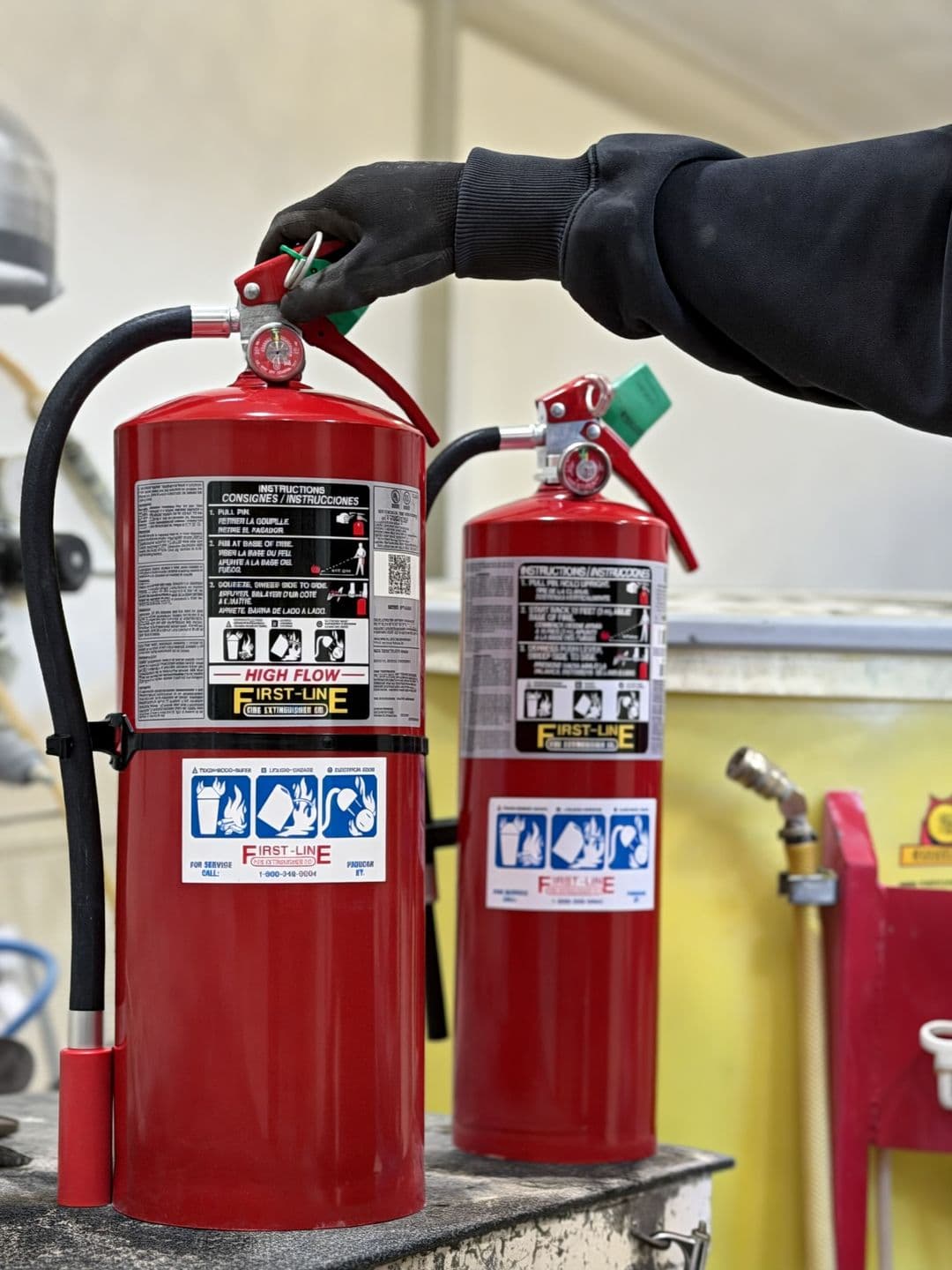
A job site needs extinguishers where the work is: at each hot work area, near fuel storage, near the heaters, and on each floor as the building goes up. We match the extinguisher to the hazard. Like any other extinguisher, they need a look every month and an inspection and service every year, and any one that gets used comes off until it's recharged.
Heavy equipment is its own hazard. Loaders, dozers, and excavators run hot, and a leaking hydraulic line can spray onto a hot engine where the operator can't see it. A vehicle suppression system mounted on the machine goes after that fire right where it starts and gives the operator time to get off safely.
What we do
We sell, hang, inspect, and service extinguishers on job sites, and we install and service vehicle suppression on your equipment, at the yard or out on the job. We recharge on site when we can. We keep up with the date.
Call 1-800-348-9604 and tell us about the job.