When something catches fire in front of you, you don't get much time to think it through. Your heart is pounding and people are looking at you to do something. That's why the 3 A's are worth learning ahead of time. They're simple, and the order is the whole point: Activate, Assist, and Attempt.
Activate
Pull the fire alarm or call 911. If somebody else is closer to the phone or the pull station, tell them to do it. Do this first, even if the fire looks small. A small fire can turn into a big one fast, and the fire department would much rather come out to a fire that's already out than show up late to one that isn't.
Assist
Help anybody who's in danger or can't get out on their own, as long as you can do it without putting yourself in danger too. That might be a customer who doesn't know the building, a coworker who's hurt, or somebody who needs a hand getting down the stairs. Getting people out comes before anything else.
Attempt
Only after the alarm is going and people are headed out should you think about fighting the fire. Attempting is a choice, not a duty. Nobody is required to fight a fire just because there's an extinguisher on the wall.
Only fight it if all three of these are true
- The fire is small and it isn't spreading. A trash can or a pan on the stove is small. A fire that has climbed the wall or reached the ceiling is not.
- You have the right extinguisher for what's burning, and you know how to use it.
- You have a clear way out behind you, and the fire can't get between you and it.
If any one of those isn't true, leave and close the door behind you. The same goes if the room is filling with thick, dark smoke, or if your gut tells you this is a bad idea. Trust that feeling and get out. The fire department can handle it from there.
What an extinguisher can and can't do
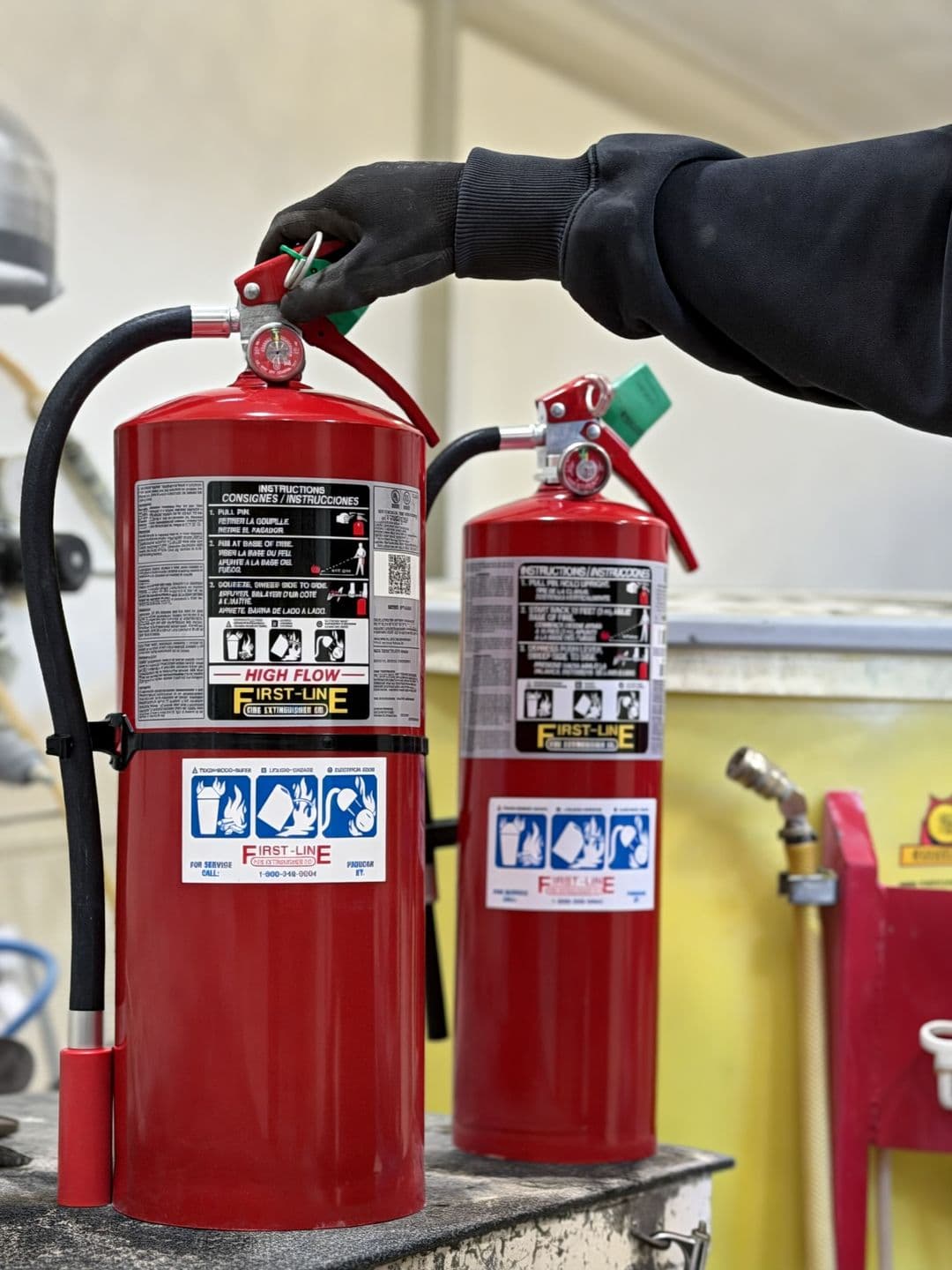
A portable extinguisher is made for a small fire caught early. It isn't made for a fire that's already spreading, and it doesn't last long. A typical extinguisher on a wall empties in seconds, not minutes. If it doesn't knock the fire down right away, you won't get a second chance with it.
It also has to match the fire. Water on a grease fire or an electrical fire can make things a lot worse. The ABC extinguisher you see on most walls covers ordinary things like paper and wood, flammable liquids and grease, and electrical fires. A commercial kitchen also needs a Class K extinguisher by the cook line. We explain the rest in types of fire extinguishers.
And it has to be ready. That means it's hanging where you can get to it, the gauge is in the green, and it's been inspected and serviced.
How to use it: PASS
Before you start, put your back to your way out and stand about six to eight feet from the fire. Then remember PASS.
- Pull the pin. That unlocks the handle. Some extinguishers have a different kind of release, so look at yours before you ever need it.
- Aim low, at the base of the fire. That's where the fuel is. Spraying the flames up top doesn't do much.
- Squeeze the handle slowly and evenly. Letting go stops it.
- Sweep side to side across the base of the fire, moving in as it goes down, until it looks out.
Then back away and keep watching it, because a fire can flare back up. If it does, and you still have agent and a clear way out, hit it again. If it won't go out, or the extinguisher runs dry, leave.
Even when you're sure it's out, have the fire department check it. A fire can keep going inside a wall or under something where you can't see it.
If a fixed system goes off
Some places have a system that puts a fire out on its own, like the hood system over a restaurant cook line or a system protecting a server room. When one of those goes off, everybody leaves. Don't stay to watch it work, and don't go back in until the fire department says it's safe.
At work
At work, follow your company's fire plan. In a lot of plans, the only job most people have is to get out. A few trained people may be picked to look at a small fire and decide whether it's safe to use an extinguisher. If you don't know what your plan says, ask now, before you need it.
The best time to find out whether you'd freeze is before there's a real fire. Reading about PASS helps. Doing it helps more. We do live-fire training on your property, where your people put out a real, controlled fire with the same kind of extinguisher they'd grab on the job.
After you use one
Any extinguisher that's been used, even for a second, has to be recharged before it goes back on the wall. The gauge can still look fine when there isn't much left inside. We cover that in how long a fire extinguisher lasts once it's been used.
If you want your people trained, or you want somebody to make sure the extinguishers on your walls are the right ones and ready to go, call 1-800-348-9604.