
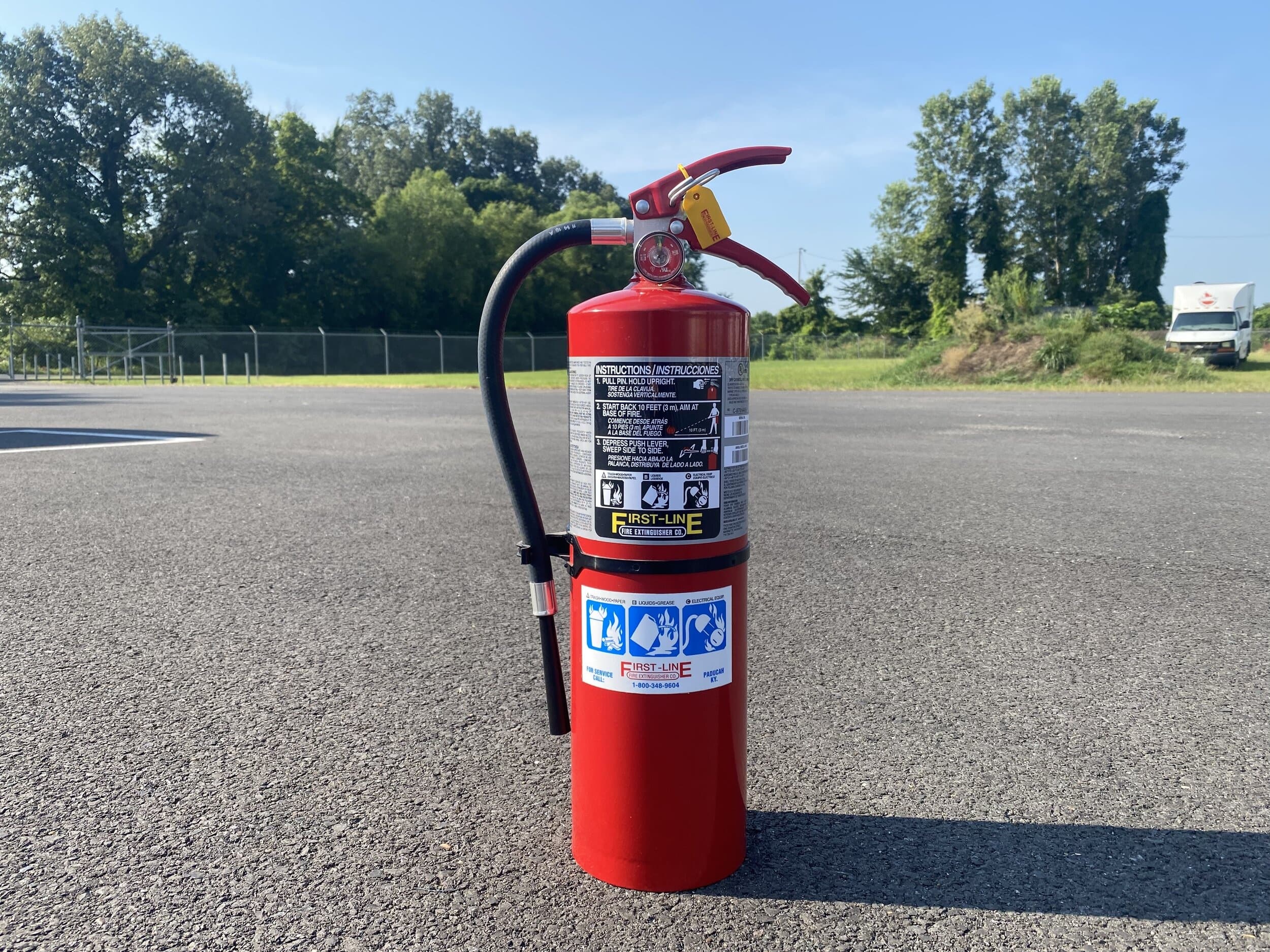
Fire safety on a work floor is not a binder on a shelf. It is a plan people have seen, exits they can find, and extinguishers that work when someone grabs one.
Walk the hazards
Look for overloaded outlets, bad extension cords, and combustibles stored wrong. If you run flammable liquids or hot work, that storage and that process have to match the hazard.
Post what people need: extinguisher locations, no-smoking areas, evacuation routes, shutoffs.
Write the plan. Practice it.
Name the exits. Name who calls. Name where the extinguishers hang. Review it when the floor changes. Run a drill so the plan is not theory.
Alarms, lights, extinguishers
An alarm that is inspected beats an alarm that “should be fine.” Exit and emergency lights have to work in the dark. Extinguishers have to be the right type, hung where people can reach them, and serviced on the date.
Annual maintenance is the professional visit. Somebody has to look at them every month. That can be your people. Or it can be us.
Training
Show people how to use an extinguisher (PASS). Show them when not to fight it. Live-fire training is available on site when you want that drilled, not just talked about.
We inspect and service extinguishers, alarms, exit and emergency lights, and we run training. Call1-800-348-9604.