DRY CHEMICAL FIRE SUPPRESSION
Dry Chemical Fire Suppression Systems
You shouldn't have to keep the date. We do.
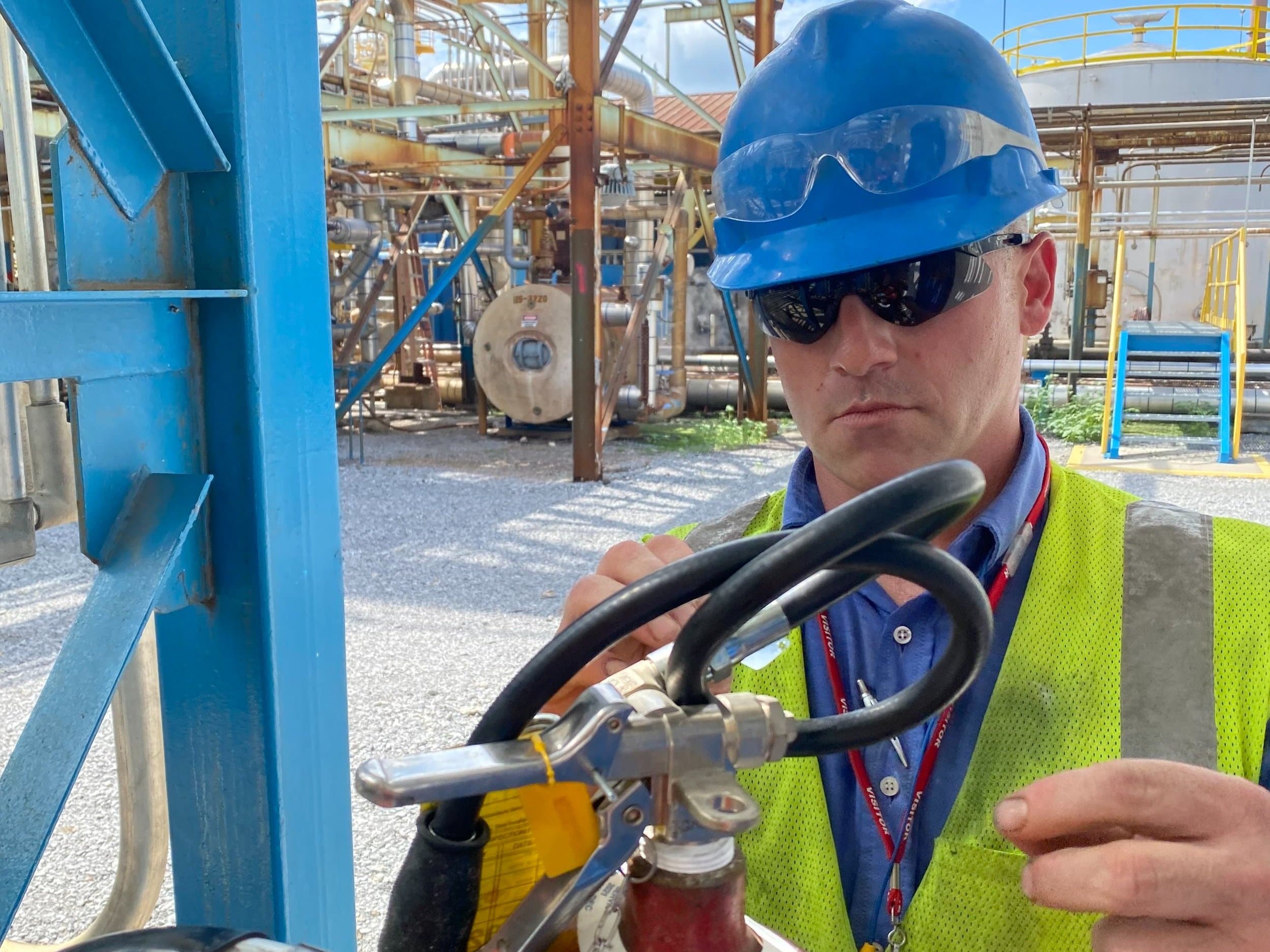
A dry chemical suppression system sits over one hazard and waits. When that spot catches, the system dumps powder right where the fire is and knocks it down before it spreads to the rest of the building. We install, inspect and service dry chemical systems for paint booths, dip tanks, quench tanks and generator rooms, and we look at each one on its own terms.
Matched to the hazard, not the whole plant
Nobody needs one big "industrial" system. A paint booth, a dip tank and a generator room each burn differently and each need their own coverage. So we start at the hazard. We look at what's in that booth or that tank, how big it is, and where the nozzles have to reach, and we build the system around it. If you add a second booth next year, that booth gets looked at the same way.
Paint booths
Overspray builds up and it burns fast. A system in the booth covers the work area and the exhaust, so a fire in the booth stays in the booth.
Dip tanks and quench tanks
An open tank of flammable liquid or hot quench oil is one flash away from a bad day. A system over the tank covers the surface of the liquid where the fire starts.
Generator rooms
A generator room is a tight space with fuel lines, hot metal and nobody standing around. A system in the room goes off on its own, whether somebody's there or not.
ABC or Purple K
There are two common dry chemical agents. ABC works on Class A, B and C fires — ordinary combustibles, flammable liquids and live electrical. Purple K works on Class B and C, liquids and electrical. Which one goes in depends on what's burning in that spot, and we'll tell you why we picked the one we did.
Every six months
A dry chemical system gets serviced every six months. We check the agent, the nozzles, the detection, the pull station and the shutoffs, and when we leave, the system has been inspected and serviced and you have a report. We keep up with the date, so you don't have to.
Systems another company put in
If someone else installed your system and they've stopped coming around, we'll take it over. We'll inspect what's there, tell you what shape it's in, and take care of it from then on. You don't have to tear out a working system to change who services it.
Kitchens and vehicles
Kitchens have moved to wet chemical systems. If you still have an old dry chemical system over a cook line, we'll replace it. We don't put new dry chem in kitchens. More on kitchen hood suppression.
Vehicle and mining equipment has its own page. See vehicle fire suppression.
Who does the work
Everybody is ICC certified and factory trained. We've been doing this since 1984, over 40 years, out of our shops in Paducah, Madisonville and Princeton, Indiana. We're 5-Star Rated on Google.
Questions
- What is a dry chemical fire suppression system?
- It's a fixed system installed over one hazard, like a paint booth, a dip tank, a quench tank or a generator room. When that spot catches, it discharges dry chemical right on the fire.
- What's the difference between ABC and Purple K?
- ABC is rated for Class A, B and C fires. Purple K is rated for Class B and C. We pick the one that fits what's burning in that spot.
- How often does a dry chemical system need service?
- Every six months. We keep up with the date for you.
- Can you service a system another company installed?
- Yes. We'll inspect it, tell you what we find, and take care of it from there.
- Do you put dry chemical systems in kitchens?
- Not new ones. Kitchens use wet chemical systems now. If you still have an old dry chem system over a cook line, we'll replace it.
Get your hazard looked at
Call 1-800-348-9604. Tell us what the hazard is and where it is, and we'll come look at it.
Areas we serve
Served from Paducah, Madisonville, and Princeton, IN. City pages:
Call or request a quote.
Send the form and we will call you.